4 min
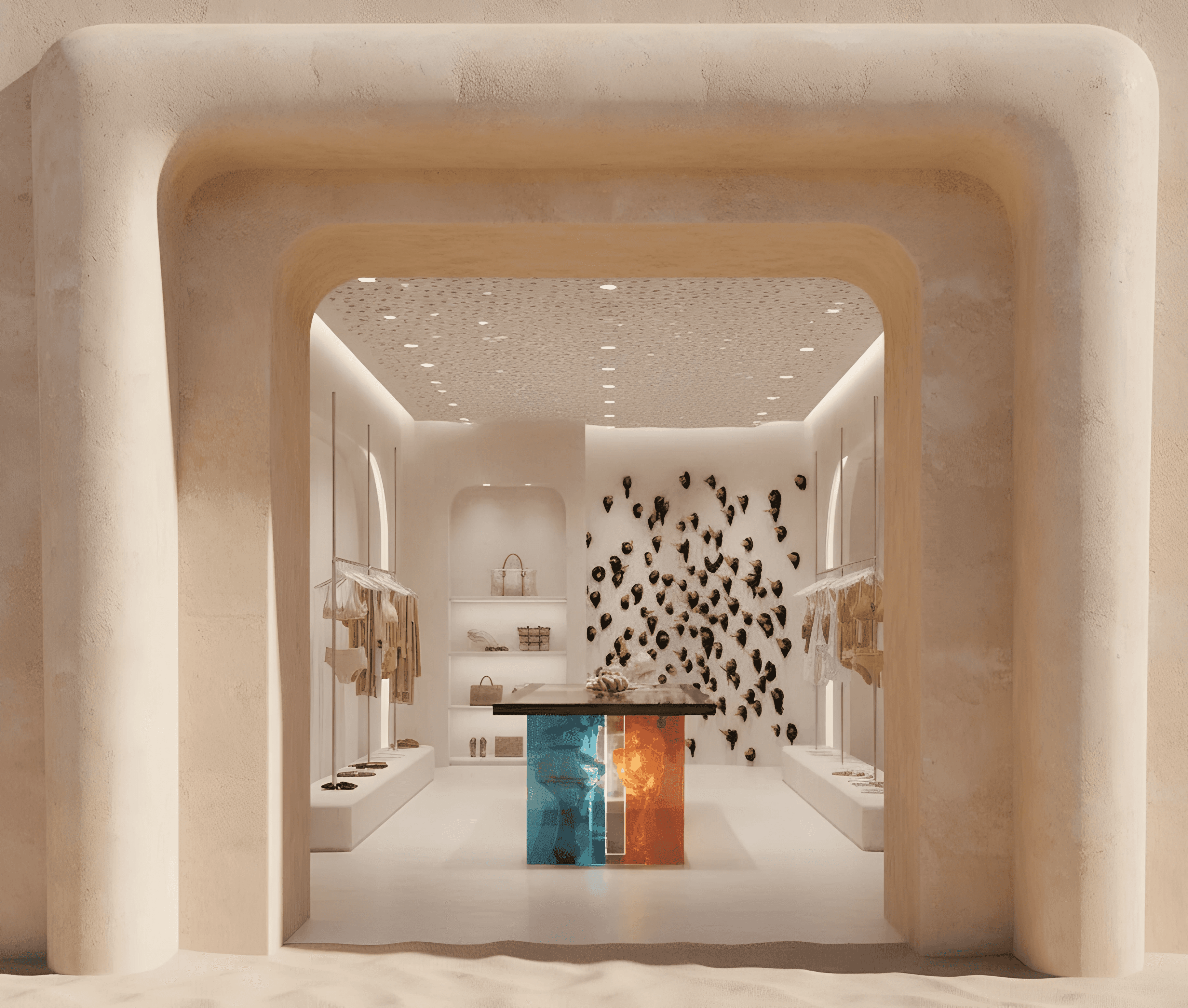
For every one percent increase in the time a customer spends in your store, sales rise about 1.3 percent. The variable that most determines whether they stay is the acoustic character of the room. Hard surfaces, layout, and sustained sound above 65 decibels quietly push customers out earlier than they planned.
For every one percent increase in the time a customer spends inside your store, sales increase by 1.3 percent. That number does not come from a new collection, a promotion, or a pricing change. It comes from the decision to stay a little longer. And the variable that most determines whether a customer stays or leaves ahead of schedule is one that most retail briefs still underspecify: the acoustic character of the room.
You know the feeling. A Saturday afternoon at Mall of Cyprus. Two hours in, and by the time you reach the car park you have a headache that arrived without warning. You were not rushing. You were not in a difficult conversation. You were simply inside a series of hard-surfaced spaces where every voice, every footstep, and every speaker system bounced off walls and ceilings rather than being absorbed by them. Sound compounded as each store filled, and the room did quietly exhausting work on everyone inside it. Nobody experienced that as noise. They experienced it as fatigue, left earlier than they planned, and bought less than they intended. The acoustic environment of those stores was never a design decision. It was whatever the materials happened to produce.
The threshold most stores cross without realising
The World Health Organisation classifies sustained sound levels above 65 decibels as noise pollution. A standard hard-surface retail fit-out at moderate occupancy routinely reaches that threshold. The customer does not register this consciously. They register it as a vague inability to focus, a readiness to conclude the visit that arrives before they have done what they came to do. The sale does not happen. The return visit becomes less certain.
A 2022 study by Charles Spence and Qian Janice Wang, published in Frontiers in Psychology, puts precise numbers to what that experience costs. Reverberation time is simply how long sound lingers in a room after its source stops: in a space with hard, reflective surfaces, sound bounces and overlaps, staying audible far longer than it should. The study found that rooms where sound lingers create measurable sensory overload, shortening dwell time and degrading the brand experience regardless of what audio is playing. Rooms where sound is absorbed quickly reduce cognitive load and stress, and keep customers in the space longer. The playlist you curated is arriving at the customer's ear as something quite different from what you chose.
When the room works against the sale
Some purchases require thought. Comparison, consideration, a moment of genuine deliberation. Research published in the Journal of Marketing found that higher ambient noise levels were consistently associated with reduced purchase deliberation and lower average transaction values, with the effect strongest in environments where customers needed to think before buying. A jewellery store with stone floors and glass cases. A fashion boutique in a hard-surfaced arcade. These are precisely the environments where the acoustic character of the room most directly connects to the conversion rate.
This is not a comfort argument. It is a commercial one. The room is part of the decision-making infrastructure, and it is operating whether it has been specified or not.
The person behind the counter is in there all day
A customer experiences the acoustic character of your store for the length of a visit. A staff member experiences it across an entire shift. Sustained unmanaged noise produces a specific kind of fatigue that surfaces in service quality before it surfaces anywhere else. It is the staff member who cannot hear a customer clearly across a glass counter and asks them to repeat themselves twice. The colleague communication that breaks down on a busy floor. The slightly shorter patience at hour seven of eight. Proper acoustic specification ensures speech intelligibility throughout the trading day, which means your team can deliver the same quality of interaction at 6pm on a Saturday that they delivered at 10am. One specification addresses the customer experience and the staff experience at the same time.

The playlist and the room are not the same brief
Understanding the distinction matters before any specification decision is made. Sound design is the selection of audio content: the genre, the tempo, the volume. Acoustic design is the specification of how sound physically behaves inside the room, determined by what materials cover the ceiling, the floor, and the walls. Most retailers have a detailed plan for the first. The second is typically left to whatever the fit-out materials happen to produce.
The WELL Building Standard's Sound concept, developed by the International WELL Building Institute (IWBI), brings both into a single framework. It establishes targets for how quickly sound should decay in a space, sets maximum background noise thresholds, and introduces acoustic zoning principles that allow different areas of a store to serve different commercial purposes. Quieter zones calibrated for considered browsing. More active zones for high-traffic moments. Sound masking uses calibrated background sound to absorb distracting ambient noise from HVAC systems and distant conversation, increasing comfort without raising the volume of anything audible.
For existing spaces, meaningful acoustic improvement rarely requires a full strip-out. Ceiling treatment, targeted absorption in acoustic felt, cork, or timber, and surface material changes within a partial refit can shift the character of a room significantly and at a fraction of the cost of a full redesign. The critical point is that the specification belongs in the brief from the first conversation. By the time the hard surfaces are installed, the room has already made its acoustic character, and changing it afterward costs considerably more.
How we design retail spaces that hold their character
We integrate the WELL Sound concept from the first stage of every retail brief. Reverberation targets and surface absorption requirements are established before the material palette is finalised, because those materials are what determines the targets. The result is a store that holds its character under pressure, one that does not degrade the customer experience precisely when the commercial opportunity is greatest.
The customer stays longer than they planned. The basket is larger. The staff member finishes the shift without the particular exhaustion that comes from a room working against them all day. None of them will mention the acoustics. That is exactly the point. Living, designed well.