5 min
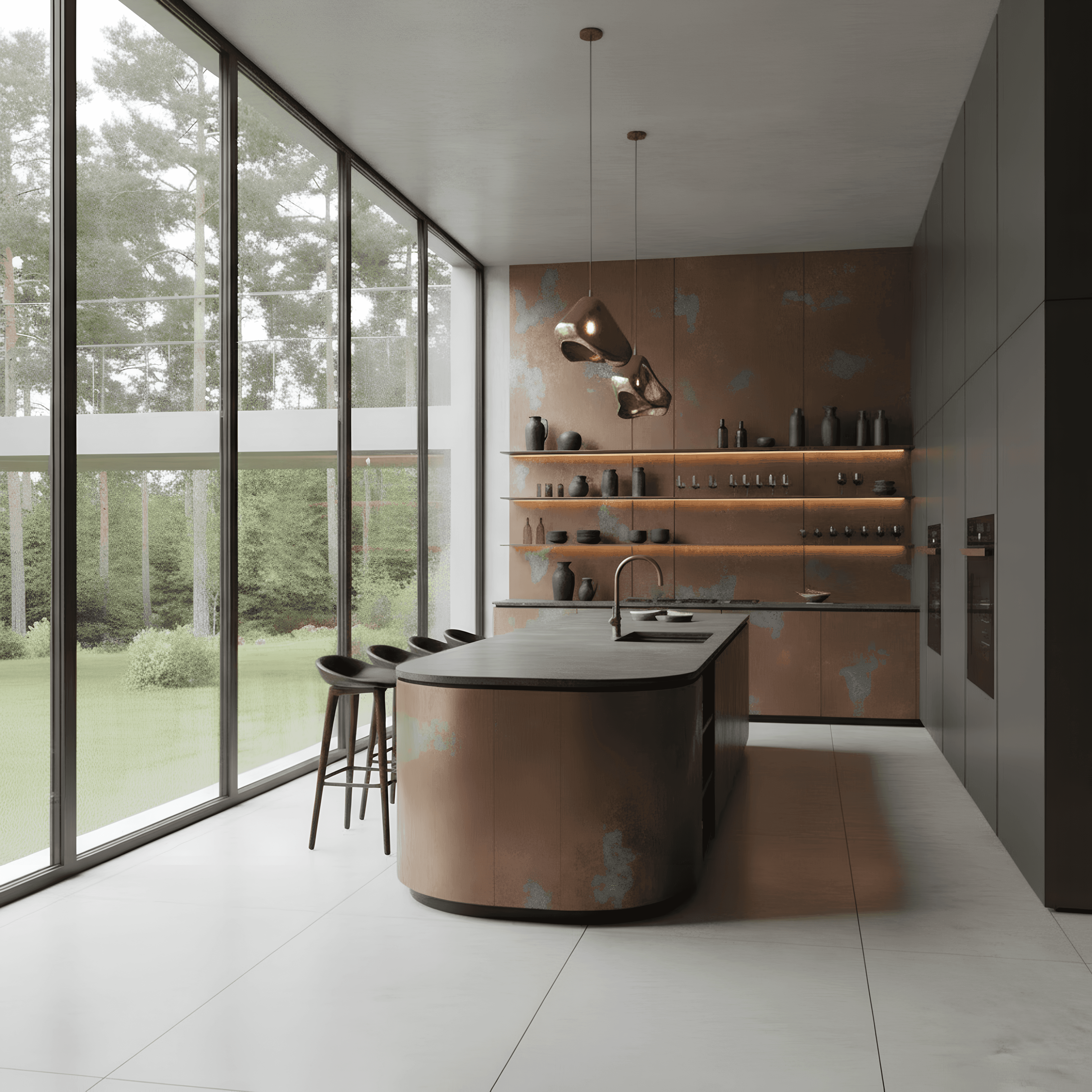
A well-lit home is not always a home lit well. Your eyes carry receptors that regulate sleep and energy independently of vision, and many Cyprus interiors feed them the wrong light at the wrong time. The spectrum, intensity, and timing of home lighting shape your sleep, mornings, and evenings more than any fixture choice.
You have spent real money making your home beautiful, and it is. The light in the evening is warm and considered. The fixtures are good. And yet the sleep is not what it should be. The mornings are slower than they used to be. The evenings do not quite restore the way you expected a well-designed home to restore. You have adjusted other things: the schedule, the screen time, the evening routine. The light has not been part of that conversation, because it has never looked like the problem.
Light is not only a design variable. It is a biological signal. The human body responds to light involuntarily and continuously, through receptors in the eye that are sensitive not to brightness in the conventional sense but to the specific wavelengths present in the light source. These receptors feed directly into the systems that regulate sleep, cortisol production, alertness, and mood. A home that is lit beautifully by design standards can be lit in a way that works against the body's fundamental rhythms. The person living in it will feel the effect every night without being able to name its cause.
The part of your eye that has nothing to do with seeing
In 2002, researchers at Brown University identified a third type of photoreceptor in the human eye, distinct from the cells responsible for vision entirely. These receptors do not contribute to conscious sight. Their sole function is to read the quality of light in the environment and signal whether it is day or night to the body's internal clock. They are maximally sensitive to blue-spectrum light, the kind that dominates daylight and, crucially, most artificial light sources. When they detect it in the evening, the body's clock interprets the signal as midday. It suppresses the hormone that prepares the body for sleep. The body does not move toward rest, regardless of how tired the person feels or how late the hour is.
The rhythm this system governs is ancient, calibrated over centuries to the spectrum of natural light. It is not calibrated to the light sources that most homes currently contain.
What an evening in your home looks like to your nervous system
Colour temperatures between 3,000 and 4,000 Kelvin, the range most commonly specified in residential interiors, are cool, moderately bright, and rich in the blue-spectrum wavelengths the body interprets as midday. Experienced through the two to three hours before sleep, this light tells the body's internal clock that it is mid-afternoon. The biological preparation for rest is delayed or suppressed. The person in the room will lie in bed feeling alert without understanding why.
In 2022, a panel of researchers from Harvard, Oxford, and the University of Manchester published a consensus paper in PLOS Biology establishing evidence-based recommendations for indoor light exposure across the day. For the hours before sleep, their recommendation was clear: melanopic light levels below 10 lux to protect melatonin production and support sleep onset. A standard living room lamp sits well above that threshold. So does a television screen watched at close range. The cost of specifying the wrong colour temperature is not an abstract wellness concern. It is a measurable reduction in the quality of recovery, every night, in the home that was built to provide it.

The morning your home is not providing
The problem runs in both directions. Morning light in the blue spectrum, at sufficient intensity, is what signals the body's clock to begin the day: raising cortisol, increasing alertness, and anchoring the rhythm so that the following evening's melatonin production occurs at the right time. Without that morning signal, the rhythm drifts. The fatigue that follows is not willful. It is biological.
Most residential interiors in Cyprus do not deliver morning light at the intensities required, particularly where natural light is inconsistently distributed or where occupants move quickly from bedroom to without extended exposure. The artificial lighting that substitutes is rarely specified with morning performance in mind. The result is a home that provides neither the morning signal the body needs to start well, nor the evening conditions it needs to end well. The specification that addresses both directions does not require architectural transformation. It requires that the brief includes light as a biological variable alongside its aesthetic role, and that colour temperatures, intensities, positions, and control systems are selected to support the body's daily rhythm rather than simply to make the room look well-lit at the hour of the photograph.
What it means to specify light for a body, not a room
It does not look clinical. A home specified for circadian rhythm looks like a home where someone thought carefully about what happens after dark and before it. The fixtures are warm. The atmosphere is considered. The difference is not visible in the photography. It is experienced in the sleep, and in the quality of the morning that follows.
The Light concept within the WELL Building Standard, developed by the International WELL Building Institute (IWBI), establishes specifications for circadian-effective light levels in the morning, limits on blue-spectrum exposure in sleeping areas during evening hours, blackout performance criteria for bedrooms, and control requirements that give occupants the ability to shift the room's light environment as the day progresses. These specifications are derived from the research that has established the relationship between light exposure and sleep quality, immune function, and cognitive performance.
In practical terms, this means colour temperatures that shift across the day, closer to 2,200 Kelvin in the evening rather than the 4,000 Kelvin of a conventional specification, combined with dimming profiles and blackout performance that actually works. For an existing home, this is primarily a question of fixture selection and control systems rather than structural change. It is a conversation that is as available to a completed home as to a new project.
How we design spaces that work after dark
As an interior architecture studio, we embed the WELL Light concept into residential projects from the earliest stages of the brief. In practice, that means colour temperature, intensity, spectral composition, and control systems are part of the design process alongside material selection, spatial proportion, and every other decision that determines how a home feels. The fixtures serve both purposes: they look exactly as a well-designed home should look, and they do something that most well-designed homes do not. The home we design for you is one where the light actively supports your body's rhythms rather than working against them. That is what living, designed well, actually looks like in a room.
The evening winds down the way evenings are supposed to. The room shifts without effort, the body follows, and the morning is different: sharper, more willing, less in need of management. You did not change your schedule or your habits. The light changed. When a home is designed to support the rhythms your body already knows how to follow, the rest takes care of itself.