4 min
Most design briefs begin with images and preferences. The better ones begin with what the space needs to do for the people inside it. Decisions carry their greatest power at brief stage, so defining performance, comfort, and health goals before style references leads to outcomes a moodboard alone cannot reach.
In 2004, Patrick MacLeamy, then CEO of HOK, drew a curve that the construction industry quotes often and applies far too rarely. It showed something brutally simple: the earlier a decision is made, the greater its power over cost, quality, and outcome. Early changes are cheap and decisive. Late changes are more expensive, more constrained, and far less capable of changing what fundamentally matters.
The brief sits at the top of that curve.
Which makes it strange that it is still treated as administrative preamble rather than what it really is: the most consequential design document in the entire project.
And yet most design briefs are still written like intake forms. Preferred styles. Material references. Budget range. Target completion date. Useful information, certainly. But rarely the information that determines whether a space will actually work.
Because what is usually missing is not detail. It is direction.
The brief has too much power to be this underspecified.
The missing page in every design brief
Across residential, hospitality, and workplace projects, one question is still strangely absent from most first conversations:
What does this space need to do for the people inside it, and where is it currently failing?
The moment that question enters the room, the nature of the briefing changes.
A bedroom suite that becomes uninhabitable by late afternoon because of solar gain through west-facing glazing. A hotel corridor where every arriving guest announces themselves to the entire floor. A boardroom where speech clarity drops just enough to make every meeting more tiring than it should be. These are not aesthetic complaints. They are performance failures.
They are also highly designable.
But the conventional brief is not structured to capture them. It tends to document visual ambition before operational reality. It asks what the client is drawn to before asking what the room must resolve.
That is the missing page.
Not more information, but different information. The kind that identifies where comfort breaks down, where the body feels friction, where the environment quietly underperforms. Most clients feel these problems immediately. Very few arrive with the language to name them. That is exactly why the brief has to.
Because once those failures are articulated, the project stops being a matter of styling and starts becoming a matter of precision.
Three seconds that change a six-figure project
Take a sentence that appears harmless in a first meeting:
“I want the master suite to feel calm.”
One designer hears that and moves directly toward visual interpretation. Softer tones. Linen textures. A muted palette. Low furniture. Warm lighting. The room may well look calm in photographs and on completion day.
But whether it remains calm at 10pm in August is another question entirely. Whether the glazing has been moderated. Whether stored heat has been addressed. Whether the acoustic environment supports sleep. Whether the artificial light eases the body toward rest or subtly works against it. None of that is answered by palette alone.
A different designer pauses.
Calm at what hour? Calm for sleeping or for reading? What should the room do, physically, between evening and midnight?
That pause lasts seconds. Its consequences can shape the entire project.
Now the suite is no longer being designed as an image. It is being defined as a set of conditions: thermal, acoustic, visual, atmospheric. And those conditions can influence the envelope, the shading strategy, the ventilation, the specification of materials, the control of light, and the placement of furniture long before a fabric is chosen.
This is where projects quietly split in two. One is designed to resemble an idea. The other is designed to sustain one.
The same distinction applies beyond residential work. In hospitality, a room is not successful because it looks serene on a website. It succeeds when the guest sleeps deeply, wakes well, and feels better inside it than they do elsewhere. In commercial space, an office is not strong because it appears polished. It is strong when people can hear, think, focus, recover, and stay effective over the course of the day.
The questions that unlock those outcomes are not dramatic. They are exact.
And they usually take only seconds to ask.
Why the Pinterest board comes third
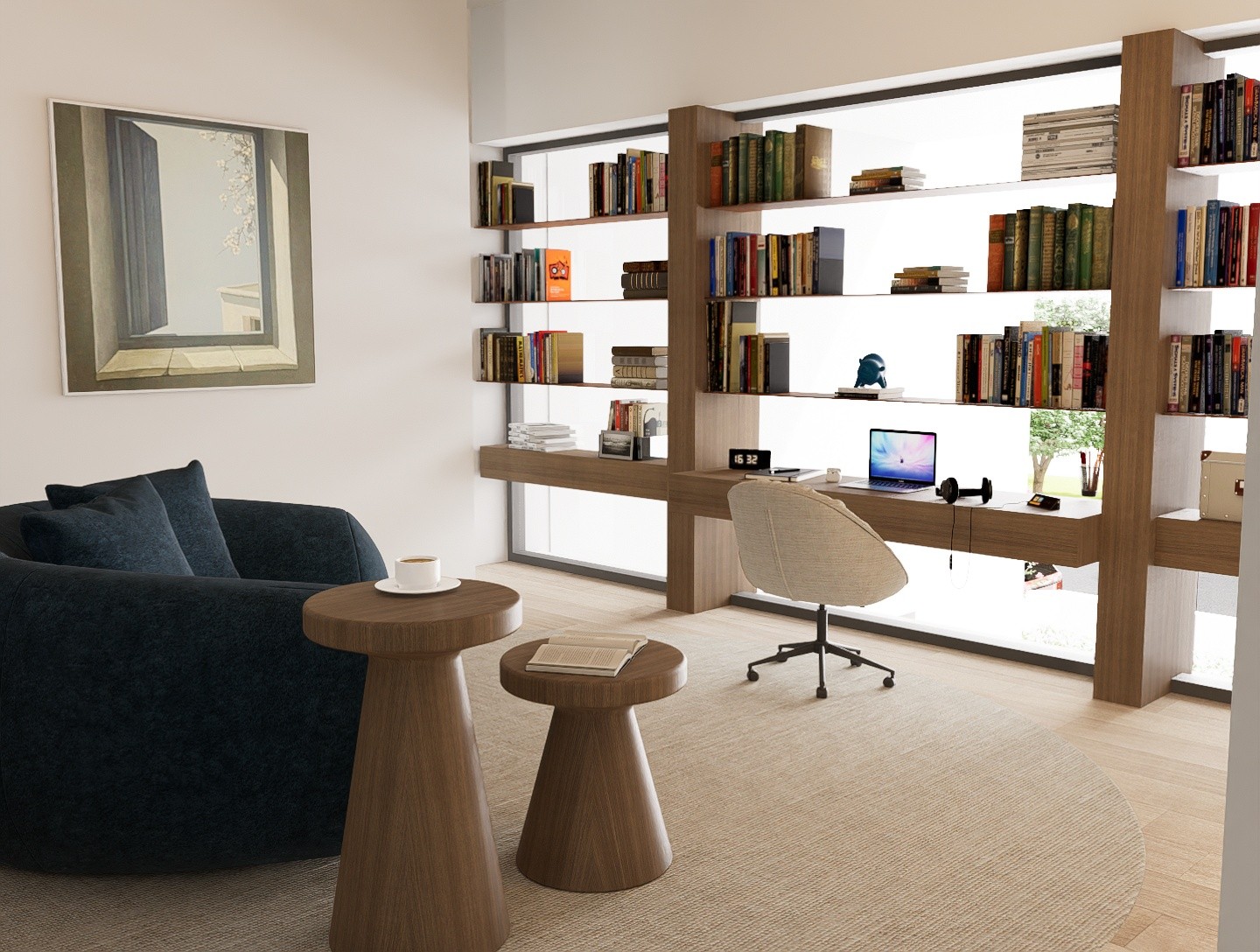
A performance-led brief does not reject aesthetics. It simply places them in the correct order.
People first. Performance second. Aesthetics third.
First: who is using the space, how they move through it, at what hours it matters most, and what their current environment fails to provide.
Second: how the space must behave in response. Its thermal range. Acoustic quality. Air conditions. Light levels and timing. Material health. The measurable and semi-measurable variables that shape experience long before anyone comments on style.
Third: the visual expression of all of the above. Materials, finishes, proportion, atmosphere, references, texture, restraint, drama.
This is not a demotion of aesthetics. In fact, it gives aesthetic decisions far more authority.
A material selected only because it looks right can always be replaced by another material that also looks right. A material selected because it looks right and behaves correctly within the logic of the space becomes harder to substitute. It belongs more deeply.
That sequencing is embedded in the International WELL Building Institute’s integrative design approach, which asks teams to define health and wellbeing goals before design development truly begins. Certification is not the point here. Order is.
The Pinterest board still matters. It still inspires. It still helps articulate taste, aspiration, and tone.
It just should not be asked to do the job of a brief.
The invisible difference between a good room and a great one
Once the project begins, the effect of that sequencing becomes visible in a way most clients do not notice consciously but respond to immediately.
When the brief is clear on performance, decisions begin to lock into each other. The acoustic target affects the ceiling build-up and the wall surfaces. The lighting intent influences window treatment, reflectance, fixture specification, and control strategy. Thermal expectations affect glazing, shading, spatial arrangement, and the timing of use. Material choices narrow because some options are no longer merely fashionable, but incompatible.
A chain of reasoning appears.
And the room starts to feel like one idea rather than a series of independent selections.
Remove that chain, and the opposite happens. The ceiling is chosen for budget. The lights for output. The finishes for appearance. The layout for convenience. Each choice may be individually defensible. None of them may be wrong. But nothing is truly reinforcing anything else.
That is where many visually impressive interiors quietly lose force.
Because the difference between a good room and a great one is rarely one dramatic gesture. It is the density of relationships between decisions. The sense that each choice knows why the others are there.
Clients tend to feel that absence before they can explain it. What they often say, in some form, is this:
“It’s beautiful, but it doesn’t feel like mine.”
That sentence is almost never about beauty.
It is about misalignment. The room may be elegant, expensive, even expertly finished. But if it does not correspond closely enough to the person living in it, sleeping in it, working in it, or returning to it, then something foundational was missed.
And what was missed was usually missed early.
The τoπos perspective
At τoπos, the brief is not a checkpoint before design. It is design in its earliest and most consequential form.
We treat it as the point where the project’s internal logic is established: what the space must support, what it must correct, what kind of physical and emotional conditions it needs to create, and what success should still look like long after handover.
Because our designers are trained in the WELL Building Standard, the first conversation naturally includes variables that many briefing processes push too far downstream: air quality, acoustic performance, circadian-aware lighting, thermal comfort, and material emissions.
Not as technical extras. Not as specialist add-ons.
As foundations.
Which also means the first meeting matters more than most clients realise. The quality of that conversation can determine whether the project begins with surface references, or with the questions that actually shape outcomes.
So before the meeting happens, these are the questions worth bringing with you.
Before the reference images. Before the palette discussion. Before the room is described as elegant, minimal, warm, contemporary, timeless, or bold.
Start here.
What does this space need to do for the people inside it, and where is it currently failing?
A bedroom that overheats. A hospitality suite that never feels restful. A workspace people start escaping from by mid-afternoon. This question identifies the gap the design needs to close.
At what hour does this space matter most, and what should it feel like at that hour?
A living room at night. A hotel room at sleep time. A lobby at check-in. A boardroom in the middle of a long day. The critical hour often reveals more than the overall concept ever will.
What do people keep complaining about that everyone has stopped trying to fix?
Noise transfer. Stale air. Harsh glare. Poor temperature stability. Awkward movement. The recurring complaint is often the clearest design brief in the room.
Do different people need this space to do different things?
Two occupants with different sleep preferences. A retail environment that needs to energise at the entrance and slow people deeper inside. A workplace that must support visibility and concentration at once. Conflicting needs are not a problem. Unnamed ones are.
Two years from now, what would make you say this project was worth the investment?
Not how it looked in the reveal photographs. What it changed. What became easier. What stopped being a source of friction. The answer is often much closer to the real brief than any style reference.
Two years after handover
The strongest interiors do not keep asking to be admired.
They settle.
The hotel guest sleeps through the night and never needs to ask why the room felt unusually good. The executive team leaves a meeting less fatigued because the acoustics carried the conversation properly. The homeowner stops noticing the light, the temperature, the silence, because all three are behaving in a way that feels entirely natural.
This is the point.
Not that the design performs like a feature. But that it stops performing as a feature and starts behaving as part of life. Quietly. Reliably. Without demanding interpretation.
By then, the best decisions have disappeared into the atmosphere of the space.
They were made before the finishes were selected. Before the visuals were approved. Before the material board was laid out. In a conversation that most projects still underestimate.
A well-briefed space does not merely look resolved.
It lives resolved.
So, what does your space need to do before anyone decides what it should look like?